
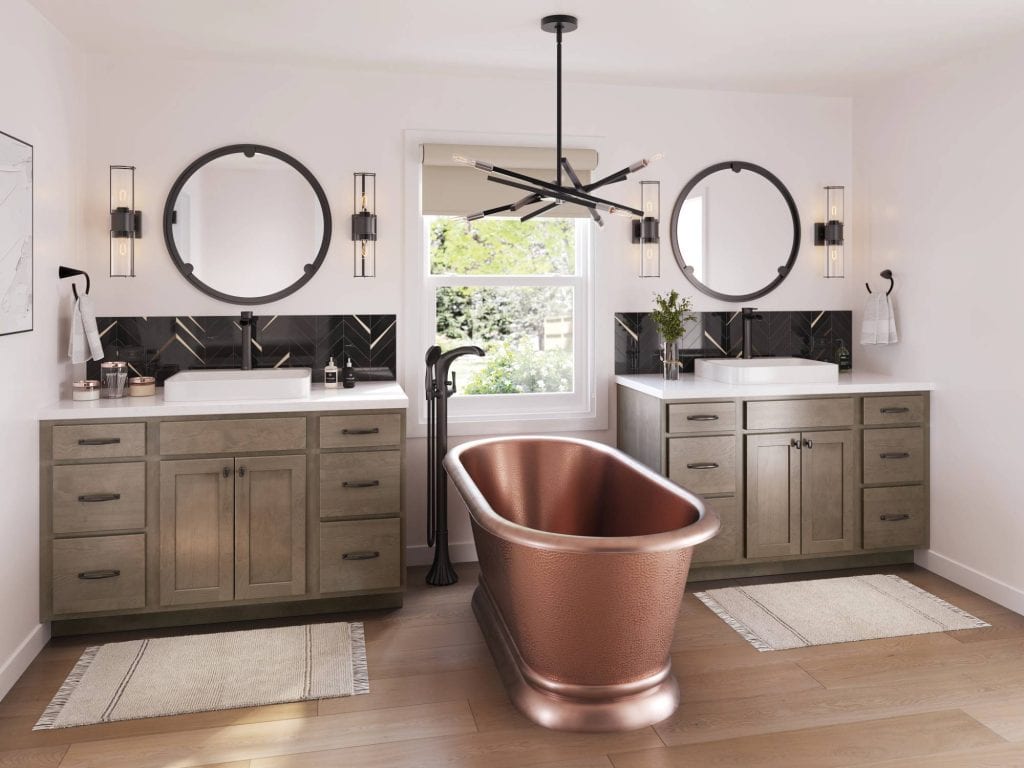
If you’re planning a bathroom remodel, installing new cabinets is one of the most effective ways to transform the look and feel of your space. Whether you’re upgrading for style, storage, or function, proper cabinet installation ensures everything looks polished and performs well for years to come. While hiring a professional is always a great option, many homeowners are tackling this project themselves—and with the right tools and guidance, you can too.
At Six Points Cabinets, we believe every project should be built with craftsmanship and confidence. Follow this step-by-step guide to install your bathroom cabinets like a pro.
Step 1: Plan and Prepare Your Space
Before you lift a single cabinet, preparation is key. Start by measuring your bathroom carefully—height, width, and depth. Make note of plumbing locations, electrical outlets, and wall studs. These details will help you determine where your cabinets will fit and how they’ll be secured.
Remove any old cabinetry or fixtures, and repair damaged drywall if needed. Clean the walls thoroughly to remove dust and debris, ensuring a smooth surface for installation. It’s also a good idea to locate wall studs with a stud finder and mark them with painter’s tape or pencil lines. Studs are essential for securely anchoring your cabinets.
Pro Tip: Double-check your measurements against your cabinet specifications. Even a small discrepancy can affect the alignment or fit of your vanity and countertop.
Step 2: Gather Your Tools and Materials
Having the right tools on hand makes installation faster and easier. You’ll need:
- A level
- Tape measure
- Drill and bits
- Stud finder
- Clamps
- Screws
- Shims
- Pencil
- Safety goggles
You may also need caulk, wood filler, or a jigsaw for cutting holes to accommodate plumbing. If your cabinet set includes hardware or trim pieces, organize them beforehand so you can easily access what you need.
Pro Tip: Invest in a good quality level. Proper leveling is one of the most important aspects of cabinetry installation—it affects the look, performance, and durability of the finished product.
Step 3: Mark Reference Lines
Next, determine the height and positioning of your cabinets. Standard bathroom vanities are about 32 to 36 inches tall, but this can vary based on personal preference or sink style.
Mark a horizontal line on the wall at the top edge of your base cabinet using a level. Then, draw a second line where the bottom of the countertop will rest. For wall-mounted cabinets, mark a similar set of reference lines for the bottom and top edges.
These lines will guide you during installation and ensure everything stays straight.
Step 4: Install the Base Cabinets
Always start with the base cabinets first. Move your cabinet into position, aligning it with your reference lines. Check that it’s level from front to back and side to side. If your floor is uneven (a common issue in older homes), use shims under the cabinet to achieve a perfect level.
Once level, secure the cabinet to the wall studs using screws through the mounting rail on the back of the cabinet. If you’re installing multiple cabinets, loosely attach each one first, then clamp them together and adjust for perfect alignment before tightening all screws.
Pro Tip: When joining multiple cabinets, drill pilot holes and use screws to connect them through the side panels. This creates a seamless, professional look.
Step 5: Cut Openings for Plumbing
Before installing the sink and countertop, cut holes in the back panel of the cabinet to accommodate plumbing lines. Use a hole saw or jigsaw to make clean, precise cuts. Make sure to leave enough clearance for the pipes and valves, but avoid removing too much material—this could weaken the cabinet’s structure.
Step 6: Secure Wall Cabinets (If Applicable)
If your bathroom design includes wall-mounted cabinets or a medicine cabinet, install these after the base cabinets are secured. Use your reference lines and stud markings to align and anchor them. It’s helpful to have a second person assist with holding the cabinet in place while you drill and secure it to the wall.
Always check for level as you go—small adjustments can make a big difference in how the final installation looks.
Step 7: Attach the Countertop and Sink
Once all cabinets are in place and secure, it’s time to install your countertop. Apply a thin bead of silicone caulk to the top edges of the base cabinet before positioning the countertop. Make sure it sits evenly and flush against the wall.
If you’re installing a drop-in sink, cut the opening according to the sink template and apply silicone around the rim before setting it in place. Connect the plumbing and check for leaks once everything is assembled.
Step 8: Add Finishing Touches
With the main installation complete, it’s time to bring your project to life. Attach hardware such as handles, knobs, or drawer pulls. Add any trim or filler panels to close gaps between cabinets and walls.
Touch up any exposed screw holes or joints with wood filler or caulk, then clean the cabinets and countertops thoroughly.
Step 9: Step Back and Enjoy Your Work
Once you’ve completed the installation, step back and admire your craftsmanship. Installing bathroom cabinets may seem intimidating at first, but with careful planning and attention to detail, you can achieve professional-quality results that add both beauty and function to your home.
Your Partner in Quality and Craftsmanship
At Six Points Cabinets, we’re passionate about helping homeowners and contractors create beautiful, functional spaces that stand the test of time. Whether you’re tackling a DIY installation or working with a professional, we provide custom cabinetry designed for precision, durability, and style.
Ready to start your bathroom transformation? Contact Six Points Cabinets today to explore our wide range of cabinet options and finishes—crafted to make your next project exceptional.